
Patient safety and medicines3 hours
Human Factors and Patient Safety
Why competent people make errors: Reason's model, slips and mistakes, cognitive bias, fatigue, design, alarms, workarounds and team tools.
US$89DetailsAdd to cart
Consent, privacy and communication
Leading, following and resolving disagreement in U.S. care teams, with TeamSTEPPS and the IPEC competencies
U.S. licensed health professionals: physicians and residents, PAs, nurse practitioners and other APRNs, RNs and LPN/LVNs, pharmacists, dentists and dental hygienists, and allied health professionals.
Structured learning and a written reflection to show insight after a complaint, an investigation or a board inquiry.
Focused learning on a core standard of practice, with a certificate and reflection for your portfolio.
This course teaches U.S. licensees how to work effectively in interprofessional teams: how teams are structured, what professional codes and federal rules expect, how to lead and follow, how to keep a shared picture of the patient, how to support and challenge colleagues across professional lines, and how to resolve disagreement and conflict. It draws on AHRQ's TeamSTEPPS 3.0, the 2023 IPEC Core Competencies for Interprofessional Collaborative Practice, AMA Opinion 10.8, the 2025 ANA Code of Ethics for Nurses, CMS interdisciplinary care planning rules and current CMS and Joint Commission positions on secure messaging.
It is written for physicians, residents, PAs, nurse practitioners and other APRNs, registered and practical nurses, pharmacists, dentists and dental hygienists, and allied health professionals in hospitals, clinics, community pharmacies, dental practices, nursing facilities, hospice and home health. It is also useful for licensees who have received feedback, a performance plan, a peer review finding or a board concern about how they work with colleagues and want to show insight and changed practice.
Teamwork matters because most harm in U.S. health care involves several people and several handoffs of information, not one person's lack of knowledge. Boards, peer review committees and employers judge each licensee on whether they communicated, responded, collaborated and treated colleagues with respect. This course turns those expectations into practical habits and gives you tools to evidence them.
10 sections · 24 lessons · 3 hours · 20-question final assessment
Final assessment
20scenario-based questions
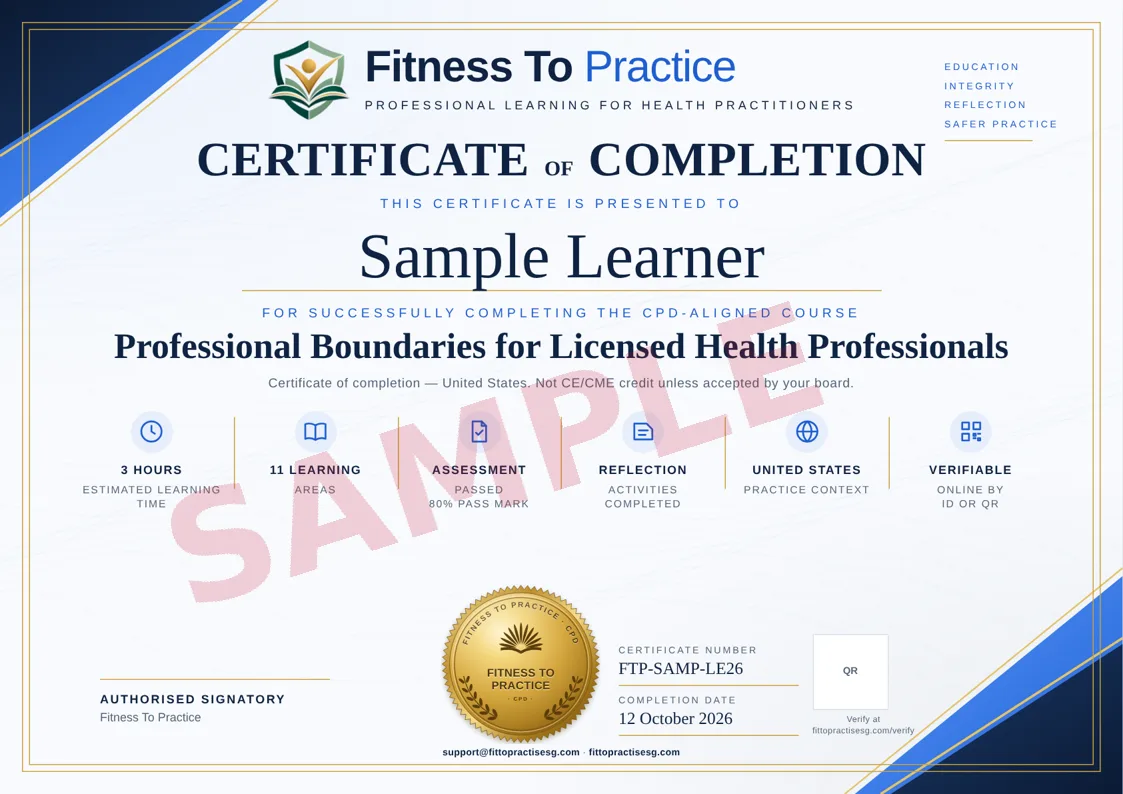
Certificate of completion
Certificate of completion. Not CE or CME credit unless accepted by your board.
The course includes a structured reflective account template: guided prompts to record what you learned, how you will apply it and how the change will show in your practice. It gives you written evidence of insight after a concern, and a ready record for your learning portfolio.
Write it in your own words and leave out anything that could identify a patient, a colleague or a case. If you have an open complaint or case, talk to your adviser before reflecting on it in writing.
The Interprofessional Education Collaborative's 2023 competencies group collaboration skills into four domains (ethics and values, roles, communication, teamwork). The course uses them as a self-assessment tool, so you can identify where your own collaborative practice is strong and where to improve.
State your concern clearly, explain the safety reason, propose an action, and if that does not work use CUS language or the two-challenge rule. The course also covers how to respond well when your own decision is questioned, which matters as much for team safety.
The course explains the 2024 CMS and Joint Commission positions on secure texting, including when sending orders by secure text may be acceptable within a compliant platform and policy. It helps you choose the right channel for each type of team communication and avoid unsecured messaging.
Disruptive behavior, failing to respond to calls or refusing to collaborate can lead to peer review findings, privileges actions, NPDB reports and board complaints. The course explains how these concerns are reviewed and how to build a credible remediation plan with evidence of changed practice.
$89 for three self-paced hours that draw on TeamSTEPPS 3.0, AMA Opinion 10.8 and the 2025 ANA Code. Checks run throughout and the final 20 questions need 80%; you then get a certificate and a teamwork reflection. Access begins immediately.
Every legal and regulatory point comes from primary sources: state practice acts and board rules, federal law and national professional codes of ethics. Anything we cannot confirm is left out.
Lessons, scenarios and assessment questions are written by us for each edition separately, then checked for accuracy, teaching quality and fair assessment before publication.
When a code, standard or law changes, the affected courses are reviewed and updated. Reported errors in legal or regulatory facts are corrected first.
Why competent people make errors: Reason's model, slips and mistakes, cognitive bias, fatigue, design, alarms, workarounds and team tools.
Safe handoffs at shift change, transfer and discharge using I-PASS, SBAR and read-back, with Joint Commission, CMS, EMTALA and ACGME requirements.
How boards judge professionalism: unprofessional conduct, disruptive behavior, impairment, reporting duties, online statements and honest license renewals.